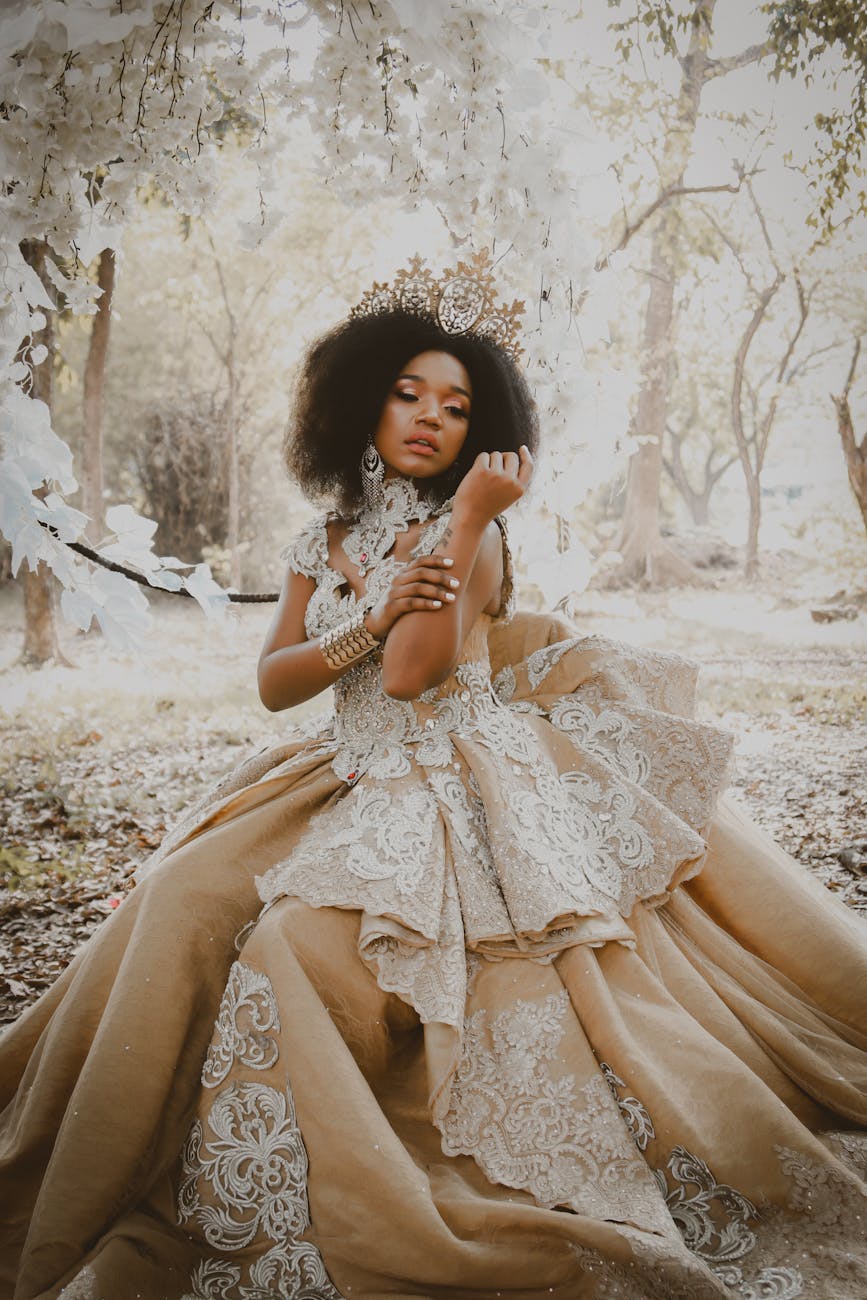
The Power Within Dress
In epic fantasy dramas like Game of Thrones, fashion isn’t just decoration—it’s narrative armor. Every stitch, color, and texture serves to unveil character arcs, often highlighting the evolution of powerful women navigating treacherous political landscapes. Costume designer Michele Clapton, with embroiderer Michele Carragher, anchored their vision in richly detailed, historically inspired garments that grounded fantasy in realism—so viewers believed these worlds could truly exist.
Take Daenerys Targaryen: she transitions from gossamer wedding silks to dragon-scale-inspired armor. Early translucent gowns signal youthful vulnerability; later structured ensembles in deep blues and blacks—encrusted with scales—symbolize her ascent as a fearsome conqueror. A striking white fur coat, its texture mimicking dragon spines, becomes her “warrior queen” uniform beyond the Wall.
Cersei Lannister’s wardrobe shifts from soft silks embroidered with lions and birds to austere, metallic black gowns reminiscent of armor. Each transition reflects her growing ruthlessness: from consort to queen, then queen of the ashes of her own making. And Sansa Stark—whose gown evolves from Northeastern blue velvets to a feather-trimmed, bark-textured ensemble—visually narrates her journey from naïve girl to Queen in the North.
These costume arcs forge identity and power visually. In research-led choices—like incorporating Elizabethan silhouettes for Cersei or Fortuny-inspired pleats for Daenerys—Clapton moves fantasy fashion beyond mere spectacle into embodiment of character growth. When Game of Thrones becomes fashion meets fantasy, it’s this detailed storytelling that makes powerful female characters feel profoundly real.
Fashion Redefined in Our World


Not confined to television screens, the fusion of fashion with fantasy thrives in real urban landscapes. A shining example: fashion meets fantasy, as showcased in London Runway Issue 84, The Fantasy Issue. This collection dives into whimsical silhouettes, iridescent fabrics, and couture steeped in myth—melding runway artistry with storybook grandeur to channel otherworldly confidence.
Meanwhile, in the UK, the sexiest women in Southampton —a playful nod to allure—are also cultural vanguards in alternative fashion. The city has emerged as a champion of street-style fantasy, where bold corsetry, cyber-goth ensembles, and ethereal bohemian looks abound. Steeped in creativity, Southampton’s fashion scene echoes fantasy ideals—visibility, transformation, and self-expression. You can surely meet attract female companions here for a wide variety of activities, whatever your intentions may be.
This environment fosters a real-world fashion x fantasy dynamic: vivid wigs, chainmail-inspired jewelry, and statement capes can be spotted at local festivals, clubs, and markets. Here, dressing isn’t just about clothing—it’s a way to embody strength, reinvention, community. Much like their onscreen counterparts, women and non-binary individuals in Southampton use fashion as personal armor and performance.
Here are five award-winning movies where fantasy fashion played a key role in their recognition:
- Black Panther (2018) – Won the Academy Award for Best Costume Design (Ruth E. Carter), blending Afro-futurism with tribal aesthetics to create regal, powerful looks.
- The Lord of the Rings: The Return of the King (2003) – Won the Academy Award for Best Costume Design (Ngila Dickson and Richard Taylor), praised for its intricate medieval and elvish garments.
- Alice in Wonderland (2010) – Won the Oscar for Best Costume Design (Colleen Atwood), featuring surreal, whimsical designs that reimagined Victorian fashion in a fantasy context.
- Fantastic Beasts and Where to Find Them (2016) – Won the Academy Award for Best Costume Design (Colleen Atwood), merging 1920s vintage with magical tailoring.
- Cinderella (2015) – Nominated for Best Costume Design (Sandy Powell), with iconic fantasy gowns like the shimmering blue ball dress that became an instant classic.
From Screen to Street
Fantasy dramas like Game of Thrones harness couture to tell stories of female power, rebellion, and metamorphosis. These costumes—engineered by Clapton and Carragher—are not decorative, they are intentional: protective, revealing, transformative.
And this translation continues off-screen. When fashion meets fantasy on editorial runways, and Southampton’s streets become an open tapestry of mythic style, we see a powerful design loop. Fantasy on TV informs real-world style, and vibrant illusion permeates our everyday wardrobes.
In both arenas, fashion is more than attire—it’s a language of power, identity, and story. Whether it’s heirloom robes in Westeros or neon corsets in Southampton, fashion fuses fantasy and reality—giving women arms of fabric and armor to define, protect, and reveal themselves as heroines in their own stories.


